Tourism digital marketing only works when the correct pieces, are set up in the correct order.
Most tour, activity, and rental businesses try different tactics — little bit of ads, social media, website changes, (throwing spaghetti at the wall) — without realizing, these components only work when they support each other. Below is the framework that shows how modern tourism marketing actually works and how each part contributes to consistent bookings.
We get ChatGPT, Google Gemini, Grok, Perplexity, and Deep Seek
to recommend your Tour and Travel Company!
Your SEO, Google Business Profile, website structure, and local signals create the trust and visibility A.I. platforms and search engines rely on to understand and recommend your business.
Once your foundation is established, channels like Google Ads, Meta Ads, and social content amplify your reach — helping travelers discover you at the exact moment they’re searching or scrolling.
Traffic only matters when it converts. Automated email, SMS follow-up, retargeting flows, and smart on-site calls to action turn curiosity into paid reservations.
Long-term content, branding, and A.I.-powered workflows strengthen your authority, improve search signals, and help your business grow without relying on constant posting or manual marketing.
Most tour operators never build the foundation Google and A.I. tools need to understand, to then recommend — their business.
Foundational SEO creates the authority signals that help your website rank, increase visibility for your experiences,
and bring in consistent bookings without always relying on ads.
Travelers often choose the first few businesses they see in Google Maps — not the best tour, but the most visible one.
Local SEO strengthens your Google Business Profile, citations, and location signals so A.I. platforms, such as ChatGPT, Gemini, Grok, and search engines
confidently place you in front of travelers who are ready to book right now.
A website isn’t just a brochure — it’s where bookings are won or lost.
If travelers can’t load your site quickly, understand your offer, or find the “Book Now” button, they move on. A conversion-focused tourism website turns your traffic into paying customers and sends the trust signalsA.I. platforms look for when deciding which experiences to recommend.
Ads only work when they connect to the right foundation.
Google Ads capture travelers who are already searching to book, while Meta ads keep your business in front of people who showed interest but didn’t commit. When aligned correctly, your ads amplify visibility, lower acquisition costs, and turn high-intent traffic into real bookings — instead of wasted clicks. Ads connected to the right foundation, equals a better cost per click.
Most travelers don’t book the first time they visit your site — not because they’re uninterested, but because they get distracted or need time to decide. Automated drip sequences and traveler re-engagement systems bring them back at the right moment through email, SMS, and Meta retargeting. This recovers bookings that would otherwise be lost and turns inconsistent traffic into reliable revenue.
Travelers scroll before they book — checking your photos, videos, tone, and build a perception of what your Tour Business represents.
Social content also sends powerful trust and authority signals to Google and today’s A.I. platforms by way of correct keyword utilization,
helping them understand your brand and surface your business more often. With the right strategy, social media reinforces credibility and nudges travelers toward booking when they’re comparing options.
Branding is about helping travelers choose you in a crowded market. When your visuals, messaging, and experience feel consistent, travelers trust your business faster and are far more likely to book. Strong branding increases conversions on your website, ads, Google Business Profile, and even your social posts — making every marketing dollar more effective.
Getting your business understood by A.I. isn’t just the future of tourism marketing, it’s now! Tools like ChatGPT, Google Gemini, and GROK rely on authority and clarity signals to decide which tours and experiences to recommend. When your foundation is set correctly, A.I. becomes a new discovery channel that puts your business in front of travelers —
and gets you booked in places your competitors aren’t even thinking about yet.
When all these components work together in the right order,
your tour, activity, or rental business becomes easier to find, easier to trust, and far more likely to get booked.
Before ads, social media, or booking recovery systems can work, your business needs a foundation that Google
and A.I. platforms can actually understand. Foundational SEO creates the clarity, structure, and authority signals that help search engines interpret who you are, what you offer, where you operate, and why travelers should trust you. Without this foundation, your website and content remain unclear to algorithms — and your experiences get buried beneath competitors who appear more relevant or trustworthy online.
At Tour Boss, we understand that travelers rarely book without researching first. They read your content, skim your pages, and compare you against others. When your SEO foundation is strong, these signals line up consistently across your website, Google Business Profile, and online footprint — making your business easier for travelers (and algorithms) to understand, find, and choose.
Travelers book the businesses that look the most established, clear, and trustworthy online. But that trust begins long before they click “reserve.” It begins with how clearly your website communicates your offers, how well your pages are structured, and whether your content aligns with what travelers are actively searching for.
Foundational SEO builds this trust by creating a website and content structure that answers traveler intent. It aligns your topics, titles, descriptions, and internal links with how travelers search — so Google and A.I. tools can confidently match your business with the people who are most likely to book. When your foundation is strong, your visibility increases, your traffic becomes more qualified, and your bookings naturally rise.
Most tour operators assume SEO is “just blogs.” In reality, it’s the digital clarity system that determines whether algorithms understand your business well enough to rank and recommend it.
Every other part of your marketing relies on this foundation.
Website conversions depend on clear messaging that aligns with your keywords.
Local SEO depends on consistent signals across your listings.
Ads become dramatically cheaper when the landing page and site structure match traveler search intent.
Drip sequences and retargeting are far more effective when visitors land on pages that answer their questions.
A.I. platforms rely on structured SEO signals to interpret what your business actually does.
Foundational SEO is the system layer that strengthens all others. Without it, your marketing efforts feel unpredictable — and often much more expensive.
With it, your marketing becomes more consistent, efficient, and easier to scale.
Most operators try everything except building a strong foundation.
They post on social. They run ads. They refresh photos. They add new pages.
But because their core SEO signals are missing or misaligned, none of it sticks.
Google doesn’t know:
what you offer
who you serve
what traveler intent your content matches
why your business is relevant
whether your pages are authoritative
When this foundation is weak, everything becomes inconsistent — rankings, traffic, trust signals, and most importantly, bookings. Foundational SEO isn’t about chasing algorithms. It’s about creating clarity, structure, and relevance so every marketing effort works the way it should.

We review which keywords and topics you’re currently targeting — and whether they match the real search terms travelers use when planning tours, activities, or rentals in your niche.
We assess whether your website and blog content follow structures that Google understands and that align with how travelers research, compare, and decide to book. We check to see if your current search terms, are labeled correctly in the right spot and order. (Titles, H1, H2, H3 headings, P, etc)
We evaluate whether your content is helping Google and A.I. platforms understand your business, strengthen your authority, and improve your chances of being recommended.
We analyze whether your content topics support traveler intent, seasonality, and demand — bringing in visitors who are more likely to convert into paid reservations.
We identify gaps and opportunities in your current SEO approach and determine what your long-term visibility roadmap should look like to support consistent bookings.
In your Strategy Session, we’ll evaluate your SEO foundation and show you which missing signals are limiting your visibility — and how to fix them for long-term bookings.
Most tour, activity, and rental businesses are built upside-down. They run ads. They post on social. They update their websites. But the digital foundation underneath it all is weak — so nothing sticks, nothing scales, and nothing feels predictable.
Here’s the truth almost no one in tourism marketing will tell you:
If Google and A.I. can’t clearly understand your business…
every marketing dollar you spend becomes more expensive,
your visibility Gets Weaker,
and every booking becomes harder to earn.
Foundation SEO is the base of your entire marketing system —
the “master signal layer” that everything else reads and learns from.
When this layer is strong:
Ads get cheaper and convert better
Your website ranks for more intent-based searches
Your Google Business Profile appears more often
Your social proof carries more authority
A.I. tools finally understand who you are and when to recommend you
When it’s weak?
Your marketing becomes unpredictable: one month slammed, the next scrambling… and you can’t figure out why.
A strong foundation makes your business easier to find, easier to trust, and easier to book — because every channel supports the same clear signals.
This is why we start here.
Fix the foundation, and everything else becomes easier.
Ignore it, and everything else becomes more expensive.
Want to understand what’s helping or hurting your SEO foundation?
In your Strategy Session, we show you the exact signals Google and A.I. interpret — and how those signals impact your bookings..
*Operates Differently than Foundational SEO
Local SEO determines whether your business shows up when travelers search for experiences near them. When your Google Business Profile, citations, categories, and local signals are consistent and optimized, Google and A.I. platforms can instantly understand who you are, where you operate, and why your business should appear in the top results — especially in Google Maps, where most mobile bookings start.
Travelers looking for “things to do near me,” “boat tours in [city],” or “ATV rentals nearby” are ready to book. Local SEO connects you with these high-intent travelers at the exact moment they’re searching — often just minutes before they make a decision.
Most travelers click one of the first three results they see in Google Maps. If your profile isn’t optimized — or if your local signals are inconsistent — Google pushes other businesses ahead of you, even if their experiences aren’t better than yours.
Local SEO builds trust instantly by improving your appearance in Google Maps, making your business look more established and relevant. When travelers can clearly see your photos, reviews, descriptions, and availability, they feel confident choosing you — especially when they’re already in your area with time to fill.
Local SEO also supports recurring demand. When you appear consistently in Maps results, travelers discover you more often, speak your name aloud, search for you directly, and reinforce more positive signals back to Google.
Local SEO strengthens the visibility layer of your marketing system.
Foundation SEO provides clarity.
Local SEO provides presence.
Website design provides conversion.
Ads provide amplification.
Booking recovery brings travelers back.
Social and branding provide trust.
A.I. reads the signals created by all of it.
When your Local SEO is aligned with your foundation, Google receives consistent proof that your business is real, active, and relevant to your destination. This improves rankings not only in Maps, but in broader search results — and increases the likelihood that A.I. platforms recommend your experiences over others.
Most operators set up their Google Business Profile once and never touch it again.
Categories go out of date. Photos become stale. Reviews slow down.
Their business info drifts across directories, creating inconsistencies.
And Google interprets inconsistency as unreliability.
When your profile lacks activity, clarity, and accuracy, Google does what algorithms always do:
It recommends businesses that appear more consistent, more trusted, and more clearly understood.
Local SEO isn’t a set-it-and-forget-it task. It’s a visibility system.
In your Growth Plan Call, we pinpoint exactly which signals your Local SEO is sending — and what’s blocking you from appearing ahead of competitors.

We evaluate whether your categories, descriptions, services, and booking links clearly communicate your offer — and whether Google can confidently match your business with high-intent travelers searching in your area.
We identify inconsistencies in your name, address, phone number, and directory listings that may be confusing Google and A.I. systems — and lowering your ability to appear in top local results where bookings happen.
We assess whether you’re targeting the geo-specific keywords and traveler-intent search terms that actually lead to bookings — and highlight opportunities you may be missing.
We evaluate the strength of your reviews, photos, and profile activity to understand how much trust your business builds with travelers — and how these signals are impacting your visibility and bookings.
We analyze how active and current your Google Business Profile appears to Google and A.I. platforms — from updates to photos to activity signals — and identify what’s helping or hurting your chances of appearing in top results where travelers make booking decisions.
Book a Strategy Session and get a clear evaluation of what’s blocking your visibility in Google Maps — and what Google and A.I. platforms need to confidently recommend your business.
Your website is often the first real impression travelers have of your business — and it’s where most booking decisions are made. But most tourism websites aren’t built to convert. If your site is slow, unclear, cluttered, or hard to navigate, travelers don’t just get confused… they leave. And when your site structure is unclear, A.I. platforms and search engines struggle to understand what you offer — meaning your business gets overlooked before travelers ever reach your booking page.
In your Growth Plan Call, we evaluate how well your current website supports conversions, clarity, trust, and A.I. readability. Before you spend money on ads or consider a redesign, you need to know exactly what’s helping or hurting your ability to turn website visitors into paying customers.
Most bookings begin with a website visit, yet most tourism websites unintentionally push travelers away. Slow load times, poor mobile layouts, unclear messaging, weak trust signals, or buried booking buttons force travelers to hesitate — and hesitation kills conversions. A high-performing website removes friction at every point, helping travelers feel confident and ready to book.
A well-structured tourism website turns all your marketing channels into revenue drivers. SEO brings in organic traffic. Local SEO brings in ready-to-book travelers. Ads bring in demand. But your website decides whether any of that traffic actually converts. When the site is clean, clear, and conversion-focused, every channel performs better — and your booking rate rises naturally.
In the A.I. era, your website also needs to be easy for language models to interpret. Clear hierarchy, descriptive content, consistent signals, and structured pages help A.I. platforms confidently understand — and recommend — your business to travelers searching for experiences like yours.
Your website is the conversion layer of your marketing system. Foundational SEO and Local SEO bring travelers to your site. Ads and social media amplify your reach. Automated follow-up brings visitors back. But your website determines whether they actually book. When your site is optimized, every other part of your marketing system becomes more effective — and your cost per booking drops.
Most tour, activity, and rental operators assume their website looks “fine” because it has photos, descriptions, and a booking button. But clarity and aesthetics are not the same thing. Travelers need speed, trust, simplicity, and direction — and most tourism websites unintentionally hide the information travelers need most. Poor layout, vague descriptions, weak FAQs, confusing booking paths, and slow performance silently kill conversions every day.
We see it repeatedly: operators redesign their site, update photos, or change colors — but bookings don’t improve because the underlying structure and messaging never addressed traveler intent or search clarity. A redesign without a system is just a prettier version of the same problem.

We evaluate how clearly your website guides visitors toward booking — from layout to navigation to call-to-action placement — and identify where travelers may be getting confused or dropping off.
We assess how fast and mobile-friendly your website is across devices, since speed and usability directly affect your search rankings, A.I. interpretation, and booking conversions.
We review your site’s titles, metadata, headers, internal linking, and content clarity to determine whether Google and A.I. platforms can accurately interpret your offerings — a major factor in visibility and bookings.
We check how seamlessly your booking platform (FareHarbor, Peek, Bokun, or custom forms) is integrated, and whether friction in the booking flow is costing you reservations.
We identify technical gaps, outdated plugins, security issues, and structural problems that may be hurting your rankings or slowing your site — and outline what’s needed to support future growth.
Book a Strategy Session and get a complete evaluation of how well your current website supports conversions, A.I. visibility, and traveler trust — before investing in any redesign or optimization.
Paid ads should turn interest into bookings — not just impressions and clicks. In tourism, that means showing up in front of travelers at the right time, with the right message, on the right platform. But without a clear strategy, Google Ads and Meta Ads can burn through budget quickly, sending the wrong traffic to a website that isn’t ready to convert.
In your Growth Plan Call, we don’t just ask, “Are you running ads?” — we evaluate whether your advertising strategy actually supports your booking goals. We look at how your campaigns are structured, who you’re targeting, what you’re saying, and whether your tracking is set up in a way that helps Google, Meta, and A.I. systems understand when your ads are successful — and who to show them to next.
Google Ads are powerful when travelers are actively searching for things to do — phrases like “sunset boat tour in [city]” or “ATV rentals near me.” These clicks have high intent, but only pay off if your campaigns are focused on the right search terms and your landing pages are built for conversion. Meta Ads (Facebook & Instagram) are ideal for retargeting people who visited your site, viewed your content, or engaged with your brand but didn’t book yet.
When your foundation is solid, ads become an accelerator: you can reach more of the right people, fill shoulder-season gaps, and promote high-margin experiences. When the foundation is weak, ads become expensive experiments. A smart tourism advertising strategy uses both platforms in different ways — search to capture ready-to-book travelers, and social to re-engage those who are still deciding.
Tourism advertising sits in the visibility layer of your system. Foundation SEO and Local SEO build your presence; your website converts; ads amplify what already works. When campaigns are aligned with your SEO, website, and follow-up systems, every click sends stronger signals back to Google, Meta, and A.I. models. Over time, that data helps them find more of the right travelers at a lower cost per booking.
Most operators either don’t run ads at all (“we tried once and it was too expensive”) or they boost random posts and hope for the best. Campaigns are often built around broad interests, generic keywords, or “get more clicks” objectives — instead of specific booking goals. Tracking is incomplete or missing, so the platforms have no idea which clicks turn into reservations. The result? High spend, low bookings, and the feeling that “ads just don’t work for us.”
The problem isn’t the platforms — it’s the lack of a system. Without clear targeting, strong landing pages, conversion tracking, and follow-up, even great tours struggle to profit from ads. In your Growth Plan Call, we step back and assess whether your ads are set up to support your booking funnel, not just generate traffic.

We look at how your Google and Meta campaigns are organized, which objectives you’re optimizing for, and whether they match real booking goals rather than vanity metrics like clicks or impressions.
We evaluate whether your search keywords, geographic settings, and audience targeting align with how travelers actually search and browse for your type of experience.
We review your ad copy, visuals, and offers to see whether they clearly communicate your value, match your landing pages, and give travelers a compelling reason to book now.
We assess whether your tracking is set up correctly so Google, Meta, and A.I. models can learn which clicks turn into bookings — and optimize toward more of the right customers over time.
We examine how your budget is allocated across seasons, campaigns, and tour types to identify where spend is being wasted and where strategic investment could drive more bookings.
Book a Strategy Session and get a clear evaluation of your current tourism advertising — what’s working, what’s wasting money, and what needs to change so Google, Meta, and A.I. systems can help you fill more tours at a sustainable cost.
Most travelers don’t book the first time they visit your website. They compare options, get distracted, save the tab for later, or plan to come back when they’re ready. Without a system to bring them back, these warm, high-potential customers disappear — costing you bookings you should be winning. Automated drip sequences and traveler re-engagement systems reconnect with these visitors through email, SMS, and Meta retargeting, guiding them back at the ideal moment to complete their booking.
In your Growth Plan Call, we evaluate how well your current marketing setup brings visitors back after their initial interest. Before investing in more traffic or higher ad spend, it’s essential to understand how many bookings you’re losing — and what type of automation could recover them.
Up to 98% of travelers won’t book on the first visit — not because they’re uninterested, but because they need more time, more information, or a gentle reminder. Most operators assume they need more traffic, when what they really need is a system that convinces existing visitors to return and book.
Automated re-engagement systems turn delayed decisions into bookings. By timing reminders, offers, or content around traveler intent, these systems convert abandoned visits into revenue — increasing your booking rate without increasing your marketing budget. When done correctly, they become one of the highest-ROI components of your entire marketing ecosystem.
Each recovered booking sends stronger behavioral signals to Google, Meta, and A.I. platforms. These systems learn who is likely to book your experiences and begin showing your business to more of the right travelers — lowering ad costs and improving your visibility across search engines and A.I.-powered recommendations.
Automated traveler re-engagement sits in the conversion layer of your marketing system. SEO, Local SEO, Website Optimization, Social Media, and Ads all generate awareness — but this system converts delayed interest into confirmed bookings. When it’s missing, your entire marketing stack feels unpredictable. When it’s strong, every other channel becomes far more profitable.
Most operators rely solely on their booking page and hope travelers return on their own. They don’t use retargeting, don’t send drip sequences, don’t utilize timing-based SMS reminders, and don’t personalize messages around traveler intent. As a result, they lose hundreds of potential bookings each month simply because no system exists to bring travelers back.
Every time a visitor leaves your site without booking, your marketing costs go up. Ads become less efficient. SEO traffic feels inconsistent. Your Google Business Profile sees weaker engagement. The system downstream suffers — all because the re-engagement layer is missing.
In your Growth Plan Call, we identify exactly where travelers drop off and what type of automation would help convert them.

We evaluate where travelers exit the booking journey and determine which steps create hesitation or confusion.
We assess whether your automated emails and messages match traveler intent and support booking decisions instead of overwhelming or distracting them.
We evaluate how well your channels work together to re-engage travelers across multiple touchpoints — guiding them naturally back to complete their booking.
We analyze whether your offers, nudges, and reminders match your high-season, shoulder-season, and low-season booking patterns.
We review whether your setup is generating the behavioral signals Google, Meta, and A.I. models use to learn who books — and how to find more travelers like them.
Book a Strategy Session and get a complete evaluation of your Booking Recovery System — so you know exactly what’s stopping travelers from returning and what’s needed to convert more of them into paying customers.
Branding isn’t about looking like a major corporation — it’s about helping travelers trust you instantly. Before reading reviews or checking availability, travelers make subconscious judgments about your business based on your visuals, tone, messaging, and consistency. Strong branding makes your business feel established, safe, and worth the price — key factors in whether someone books.
In your Growth Plan Call, we evaluate how your brand is showing up across your website, Google Business Profile, ads, social content, and booking platform. Not to critique your aesthetics — but to understand whether your branding is supporting trust, clarity, and visibility… or quietly pushing travelers toward competitors.
Travelers book the business that feels trustworthy. Your visuals, tone, colors, typography, and even the way your tour descriptions are written all affect how confident travelers feel choosing you. When branding is inconsistent, unclear, or outdated, travelers hesitate — and hesitation kills conversions.
Branding ties together every touchpoint in your booking journey. It’s the reason someone who sees your social content recognizes your business again on Google Maps… or clicks your ad because it “looks real.” When your branding is consistent, cohesive, and clear, your website, ads, and SEO instantly become more effective.
A.I. platforms evaluate consistency and clarity across your digital footprint. When your branding is strong and uniform, A.I. tools more easily understand your business identity, category, tone, and experience type — all of which help increase your chances of being recommended to travelers.
Branding sits in the trust & authority layer of your marketing system. Foundational SEO and Local SEO bring people in. Your website converts. Ads amplify. Booking recovery brings them back. But branding creates the confidence travelers need to choose you over others. When your branding reinforces your story, values, and experience type across every channel, your entire system becomes more cohesive — and more effective.
Many tour, travel, and rental operators believe branding is optional — something big companies invest in, not small experiential businesses. But in tourism, branding matters even more. Travelers are trusting you with their time, money, and safety. If your visuals feel inconsistent or unprofessional, travelers subconsciously assume the experience will be the same.
Most operators have branding that varies across their website, booking platform, Google Business Profile, and social channels. This inconsistency erodes trust and confuses both travelers and search/A.I. systems. In your Growth Plan Call, we evaluate how aligned your branding is across every touchpoint — and how that alignment impacts bookings.

We evaluate how consistently your brand appears across your website, booking software, social media, and Google Business Profile.
We assess whether your messaging matches your experience type — luxury, family-friendly, adventurous, romantic, etc.
We review colors, typography, iconography, imagery style, and how these elements influence trust and booking decisions.
We analyze the subtle brand elements that help travelers feel safe, confident, and ready to book — or uncertain and hesitant.
We evaluate whether your branding provides clear, consistent signals A.I. platforms use to understand your identity and recommend your business.
Book a Strategy Session and get a full evaluation of your branding, trust signals, visual consistency, and how well your identity supports A.I. visibility and bookings.
THE NEW ADVANTAGE YOUR COMPETITORS DON’T SEE COMING
Artificial intelligence is changing how travelers search, compare, and choose experiences — and most tour businesses have no idea it’s happening. Tools like ChatGPT, Google Gemini, and GROQ are becoming new discovery engines that recommend tours, activities, and rentals based on clarity, trust signals, and digital authority. If A.I. can’t understand your business, it can’t recommend you — and that means missed visibility and missed bookings.
In your Growth Plan Call, we evaluate how A.I. platforms currently “interpret” your business. Not to overwhelm you with tech — but to determine whether your digital presence sends the right signals A.I. tools rely on when deciding which experiences to surface to travelers.
Travelers increasingly ask A.I. tools for help planning their trips:
“Best tours in Sedona?”
“Romantic things to do in San Diego?”
“Family-friendly activities near me?”
A.I. platforms pull from your website, your SEO, your reviews, your photos, your social content, your GBP profile, and your brand consistency. Businesses with strong, clear signals get recommended. Those without them… disappear.
A.I. systems don’t guess. They look for patterns, signals, and clean data. When your business sends consistent information across every channel, A.I. tools confidently understand:
what you offer
who you serve
where you operate
the experience you provide
how travelers respond to you
This directly affects how often you’re shown to future travelers — and how many new bookings come your way.
A.I. is still new in tourism, and most operators aren’t thinking about it yet. But the ones who prepare now will have a massive edge as A.I.-assisted travel planning becomes the norm. Strong digital foundations today = stronger A.I. visibility tomorrow.
A.I. sits at the authority & scalability layer of your system.
Foundation SEO helps A.I. interpret your content.
Local SEO helps A.I. understand where you operate.
Website clarity helps A.I. evaluate your experience.
Social content builds trust signals.
Ads and booking recovery strengthen behavior signals.
When your system is aligned, A.I. platforms begin to recommend your business more often — creating a new, high-value discovery channel that runs in the background.
Most operators assume A.I. is for content creation or chatbots. But A.I. is quickly becoming the way travelers discover experiences. If the signals your business sends are incomplete, inconsistent, or confusing, A.I. simply skips over you and recommends competitors with clearer digital footprints.
A.I. evaluates your:
website clarity
content structure
review patterns
brand consistency
photos & descriptions
directory listings
booking pathways
traveler engagement
If those signals disagree or lack authority, A.I. can’t “trust” your business.
In your Growth Plan Call, we identify exactly which signals A.I. sees when it looks at your business — and what’s missing.
In-depth resources to help you define and refine your brand’s identity, mission, and voice, ensuring they align with your tour business tips and tricks.
We evaluate how clearly A.I. platforms interpret your business across your website, GBP, directories, and social channels.
We assess whether your digital presence provides the structured information A.I. needs to recommend your business confidently.
A.I. tools analyze tone, frequency, relevance, and patterns in your reviews — we evaluate what those signals currently say about your brand.
We examine whether your marketing activity helps A.I. understand who your ideal bookers are — and whether your system is teaching A.I. how to find more of them.
We identify the exact gaps preventing A.I. tools from surfacing your experiences more often — and how to fix them.
Book a Strategy Session and get a full evaluation of how A.I. currently interprets your business — and the specific steps needed to strengthen your visibility and increase your bookings as A.I.-powered travel planning grows.
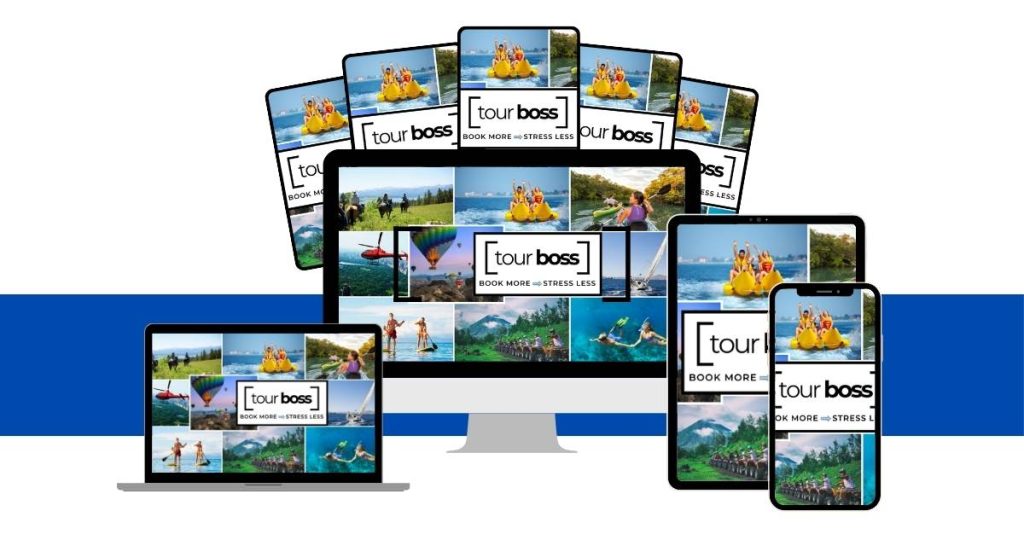
You now understand the full framework behind growing a tour, activity, or rental business in today’s search-driven and A.I.-shaped world. When your foundation, visibility, booking pathways, trust signals, and A.I. clarity all work together — your marketing becomes simpler, cheaper, and far more effective.
Most operators struggle not because their business is weak, but because their digital signals are out of order. Fix the system, and your bookings start to change quickly.
google ads, brand, marketing automation, marketing, analytics, advertising, email marketing, upselling, landing page, customer experience, customer relationship management, activecampaign, sms, automation, marketing communications, target audience, digital marketing, lead generation, return on investment, personalization, website, salesforce, customer, customer data platform, customer engagement, marketing strategy, management, tourism, loyalty, feedback, hubspot, general data protection regulation, customer service, onboarding, lead nurturing, crm, customer data, marketing campaigns, campaigns, booking software, leads, ads, marketing automation platform, sms campaigns, technology, brand awareness, data collection, tour operator, social media, conversion rate optimization, hospitality, revenue, search engine, natural language processing, customer lifetime value, customer retention, brand loyalty, zapier, customer satisfaction, content creation, dashboard, strategy, scalability, prompt engineering, content marketing, travel industry, tour operators, transportation, customers, search engine optimization, targeted advertising, behavior, social media marketing, web design, local search, experience, data, seo, email marketing email, google business profile, credibility, consumer, research, tool, visibility, sustainability, artificial intelligence, digital transformation, online advertising, virtual assistant, investment, innovation, internet, payment, statistics, landscape, email address, intelligence, big data, millennials, user experience, business model, pricing, ecotourism, smartphone, policy, software, data analysis, workflow, manage, digital, goals, travel companies, tech, industry, forecasting, goal, understanding
digital growth for tour operators, digital marketing for tour operators, tour operator marketing automation, seo for tour operators, seo for tour companies, local seo for tour companies, tour business seo, digital marketing for tour businesses, digital marketing campaigns for tours, digital marketing for tours and travels, tourism digital marketing, digital marketing in tourism industry, digital marketing in the tourism industry


















Social Media Marketing for Tourism That Builds Trust, Visibility, and Bookings
Travelers don’t just search — they scroll. Before booking, they check your photos, videos, tone, personality, and the experiences past guests are having. Social media gives travelers a preview of what it feels like to book with you. When done correctly, it builds trust, credibility, and emotional connection — all of which lead to more bookings.
In your Growth Plan Call, we evaluate how well your social presence supports your booking funnel. Not how often you post — but whether your content reinforces your brand, answers traveler questions, builds authority signals, and aligns with your website, SEO, and ads in a way that helps travelers move closer to booking.
WHY SOCIAL MEDIA MATTERS FOR GETTING BOOKED
Travelers book the experiences they trust. Social content — especially real guest photos, videos, and behind-the-scenes moments — creates instant credibility. It shows travelers that your experience is real, safe, and worth the price. It’s not the platform itself that gets you booked — it’s the trust you build and the questions you answer before travelers click “reserve.”
Social media is rarely the first place travelers discover your business, but it’s often where they decide whether to book. It fills the gap between seeing your website and making a commitment. Strong social content reinforces your messaging, showcases your experience, and eliminates doubt — making every other channel (SEO, ads, Maps, retargeting) more effective.
Consistent, high-quality social content also sends trust and authority signals to search engines and A.I. platforms. These systems use public-facing content to better understand your brand, your experience, and how travelers engage with you — improving your visibility and the likelihood of being recommended.
HOW THIS FITS INTO YOUR TOURISM MARKETING SYSTEM
Social media sits in the trust and reinforcement layer of your marketing system. SEO brings in searchers. Ads bring in traffic. Booking recovery brings them back. But social media helps travelers feel confident choosing you over competitors. When your social content reinforces the story your website and SEO are already telling, your entire marketing system becomes more cohesive and more effective.
WHAT MOST TOUR OPERATORS GET WRONG
Most operators think social media is about posting pretty photos or going viral. But tourism social media isn’t about trends — it’s about trust. If your content doesn’t answer the right questions, highlight the right benefits, or show real experiences, it won’t influence bookings. Operators often post inconsistently, with unclear messaging, generic captions, or content that doesn’t support their booking funnel.
Social media is not a standalone channel. When it isn’t connected to your website structure, SEO strategy, ads, or drip sequences, it becomes a time-consuming task instead of a booking generator. In your Growth Plan Call, we evaluate whether your social content is reinforcing your system — or floating on its own without producing results.
WHAT WE’LL EVALUATE IN YOUR GROWTH PLAN CALL
Content Relevance & Traveler Trust Signals
We assess whether your content answers traveler questions, builds credibility, and supports booking decisions.
Platform Prioritization & Focus Areas
We evaluate whether you’re posting on the platforms where your ideal travelers actually spend time and make decisions.
Message Clarity & Visual Consistency
We review tone, imagery, captions, and branding to determine whether your content helps travelers understand your experience quickly and clearly.
Engagement Patterns & Social Proof Strength
We analyze comments, tags, guest posts, and traveler interactions to understand how much trust your current content creates.
Connection to Your Broader Marketing System
We evaluate how well your social content aligns with your website, SEO, ads, and booking recovery systems — and where disconnects may be costing you bookings.
READY TO MAKE SOCIAL MEDIA WORK FOR BOOKINGS — NOT JUST POSTS?
Book a Strategy Session and get a full evaluation of how well your social content builds trust, reinforces your brand, and supports your booking funnel.